
Heart attacks, also referred to as cardiovascular disease (CVD), are now one of the leading causes of death for people worldwide in modern times. An increasing number of Indians, even among the adolescent and young age groups are prone to heart attacks due to their health damaging modern lifestyle (Toshi, 2021). Cardiovascular disease has also become the most important cause of premature death and disability in the population, especially at a productive young age, especially in adolescents (Kalra et al, 2023). Of the 57 million deaths due to non-communicable diseases in 2016, CVDrelated deaths accounted for about 17.9 million (44%) deaths, and also these diseases affect the most productive population. This shows an increasing trend in death due to CVDs over the years and is expected to rise sharply by 2030 (WHO, 2023).
In India, CVD accounted for 27 percent (n=1,61,865) of the total number of deaths of 599,500 due to non-communicable diseases. The mortality rates had a slight male preponderance and are expected to increase in the coming years (Kumar & Sinha, 2020). Sedentary lifestyles and work habits are to blame for the sharp rise in cardiac arrest rates among Indians, particularly in the youth demographic. It was estimated that 53 percent of Indians between the ages of 26 and 40 were at risk for cardiovascular disease (CVD) as a result of the dual problems of obesity and hypertension, which can lead to CVD (Goel, 2022).
George et al (2025) studied rural adolescent subjects in Kerala, obesity and overweight prevalence rates were 16.0 and 7.0 percent, respectively. Kerala leads the world in the severity of heart disease with 19.90 percent of people at great risk of developing heart disease. In 25 years (from 1993), the number of Keralites suffering from heart disease rose from 1.4 percent to 19.9 percent. Men are more likely than women (15%) to have the disorder (32%) (Thayil, 2022).
Artificial Intelligence (AI) in Machine learning (ML) models have proven to be very useful predictors in the cardiovascular system studies. They are better at capturing the intricate relationships and non-linear connections that exist between the variables and the outcomes than standard statistical models. Based on multiple studies, it was determined that support vector machines (SVM) and random forests (RF) outperformed conventional models (Alaa et al, 2019). Nursing, the foundation of healthcare requires high degree of AI application; it is a small step by the investigators to prepare nurses for applying and understanding this transformation technology in the field of nursing and health care (Bajwa et al, 2021). However, this technology is in nascent stage in the nursing domain. Limited studies have been conducted to find out the cardiovascular health risk among adolescents specifically in Kerala.
Objectives
This study sought to (1) identify and explore the cardiovascular health risk among adolescents, and (2) develop a nursing algorithm driven by artificial intelligence for early detection of cardiovascular health risk in adolescents.
Materials and Methods
The present study adopted a prospective crosssectional descriptive design. Study samples were drawn from collegiate late adolescents of all genders, aged 17 to 19 yeas in three Northern districts of Kerala viz. Kannur, Kasaragod, and Wayanad. Multistage cluster sampling technique was used. A total of 1240 students were recruited for the study.
Instrument for the study were:
(a) Adolescents’ Biosocial data schedule;
(b) Adolescents' Cardiovascular Health Risk Assessment including International Physical Activity Questionnaire (IPAQ); Modified Metagenics - Cardiovascular Risk Assessment Questionnaire; and Modified WHO STEPS Instrument for Tobacco and Substance Use.
Deployment of Machine Learning algorithmRandom Forest Classifier Data collection procedure:
After ethical clearance from the Institutional Ethics Committee, data collection permission was obtained in multicentres. Informed consent was obtained from the participants.
Adolescent Cardiovascular Health Risk Assessment tool was administered based on an Interview method, and the responses were recorded in a data sheet with a code identifier by the field investigator. The time duration taken for the collection of data from each sample was 20 to 30 minutes. No ethical issues involved; privacy, right to participation or withdraw, and dignity of the samples were protected throughout the study.
Results & Discussion
The Demographic Results
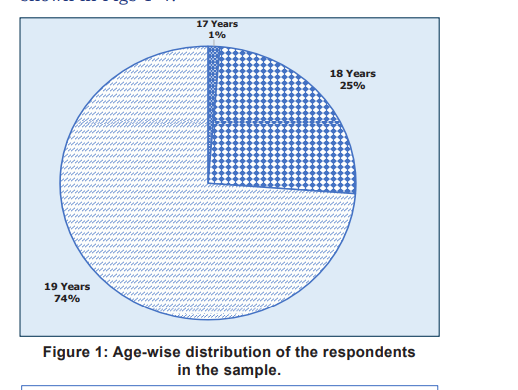
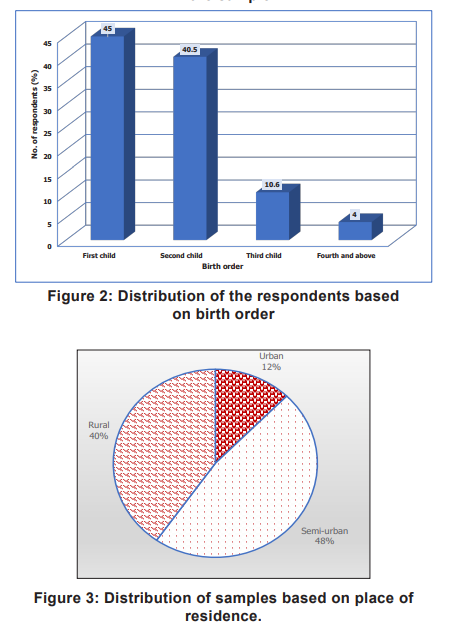
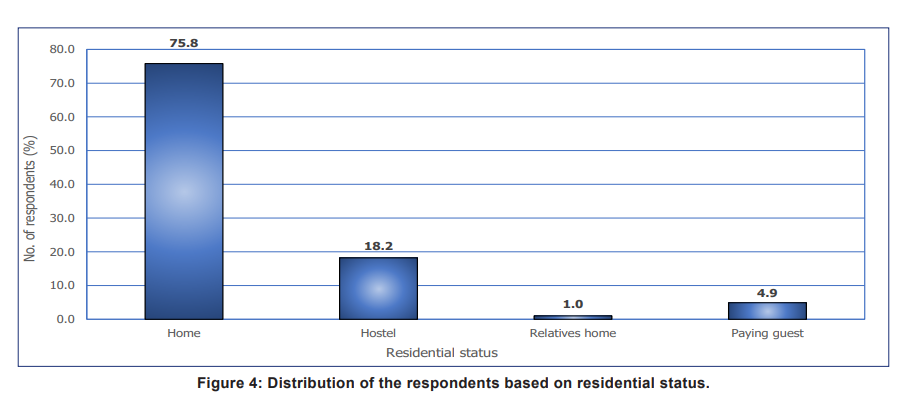
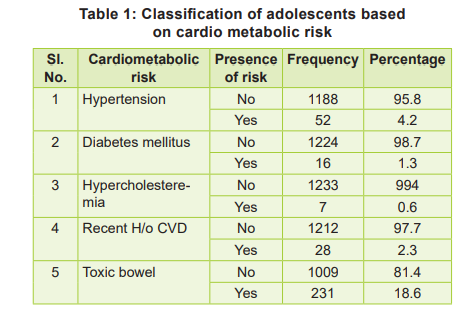
The demographic profile of 1,240 adolescents is shown in Figs 1-4.
The Cardiometabolic Profile of the Adolescents
After the study assessment of the cardiometabolic profile of adolescents, the results are outlined in Table 1.
Ekta & Tulika (2016) found that girls were more likely than boys to have excessive triglyceride levels and hypercholesterolemia. The results of the hypertension risk analysis were consistent with the research conducted by Fikriana et al (2020), which revealed that 3.2 percent of adolescents had hypertension.

This work is licensed under a Creative Commons Attribution-NonCommercial-ShareAlike 4.0 International License.